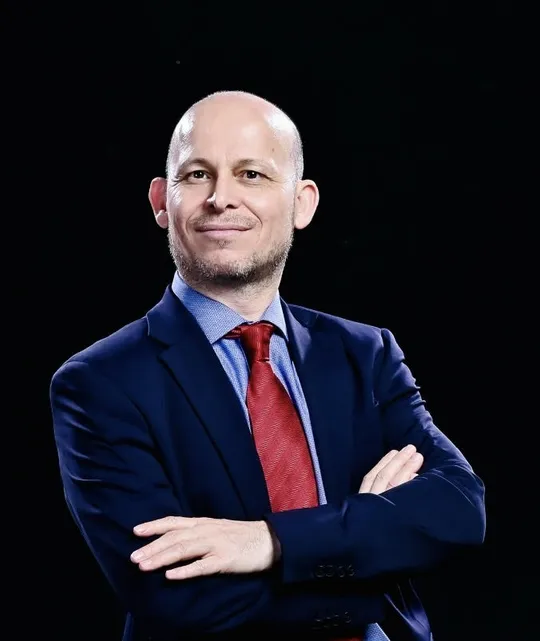
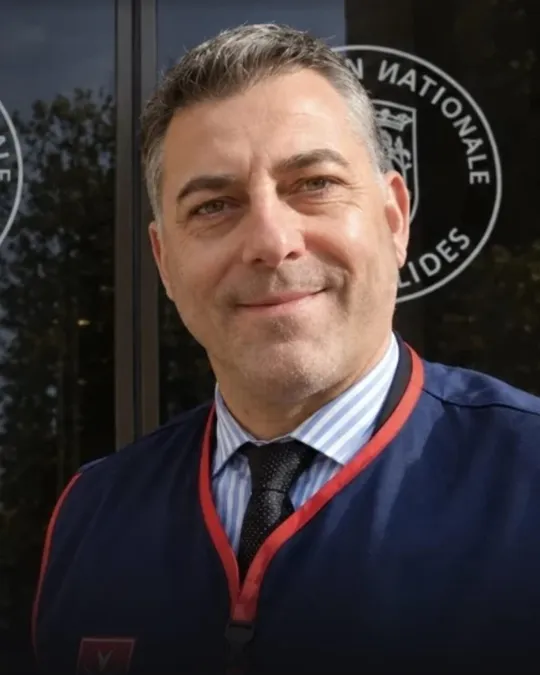
Portrait of Louis Jehel

Psychotraumatology and language

Prof.Louis Jehel

Professor of Psychiatry at the University of the French West Indies, Head of Department at CHMD

  • Psychotraumatology
  • Psychiatry
  • Post-traumatic stress disorder
  • Linguistic markers
  • Emergency psychological care
  • French overseas territories
Short address psynumia.com/jehel
  • CRP
    Martinique Regional Psychotrauma Centre
  • IPSOM
    INSERM research group on psychological trauma
  • 2022
    Les mots du trauma (Lavoisier)
01

Biography

Louis Jehel is a psychiatrist and Professor of Psychiatry at the University of the French West Indies (Université des Antilles) in Martinique. He is head of department at the Maurice Despinoy Hospital Centre (CHMD), Martinique’s public mental health hospital, and director of the Martinique Regional Psychotrauma Centre (CRP), which receives and supports people who have been through a traumatic event. He previously headed the department of psychiatry and addiction medicine at Martinique University Hospital.

A specialist in psychiatric assessment and psychological trauma, he is Vice-President of the French association of emergency medical-psychological units, the French Society of Psychotraumatology (AFORCUMP-SFP), and leads the IPSOM research group (Impact of Psychological Trauma in the French Overseas Territories) at INSERM’s Centre for Research in Epidemiology and Population Health. He set up one of the first university diplomas in psychotraumatology and co-edited, with Gérard Lopez, the textbook Psychotraumatologie : évaluation, clinique, traitement (Dunod).

With Mathieu Guidère, he studies the role of language in psychological trauma, particularly the psycholinguistic markers of trauma: Psychotraumatologie : les mots du trauma (Lavoisier, 2022), followed by Le langage intérieur en psychothérapie (Dunod, 2024). His expertise is regularly sought for international projects and by the media.

02

Interview

Psynumia asks

In Psychotraumatologie : les mots du trauma (Psychotraumatology: The Words of Trauma, Lavoisier, 2022), co-written with the linguist Mathieu Guidère, Louis Jehel makes language a gateway into the experience of trauma. The semantics of psychotrauma, narrative and autobiographical memory, predictive linguistics, artificial intelligence: the book bridges clinical practice and the language sciences. Psynumia asked him what the words of patients, and those of clinicians, can teach us about trauma.

  1. Your book, co-written with linguistics professor Mathieu Guidère, links psychotraumatology and the language sciences. Why do words play such an important part in understanding psychological trauma?

    Language is much more than a means of communication. It is one of the ways in which we organise our experience, represent the world and try to make sense of what we go through. When someone goes through a traumatic event, this ability to organise experience can be deeply disrupted. They may find it hard to recount what happened, to place events in time or to express what they felt.

    Conversely, certain words, repetitions or expressions can reveal the place the event still holds in their inner world. That is why I believe the study of language opens a complementary path to understanding psychotrauma. The point is not to reduce suffering to words, but to recognise that words can teach us something about suffering.

  2. In consultations, clinicians naturally focus on the facts the patient reports. Does your approach call for paying as much attention to the way they tell them?

    Absolutely. Two people can describe a comparable event using very different words, narrative structures and emotional expressions. The content of the account tells us what was experienced, while its form can shed light on how that experience is represented and expressed. So we need to listen to the words chosen, changes of tense, repetitions, hesitations, references to bodily sensations and the way the patient places events.

    But we must remain cautious: a hesitation can have many causes, and an account with little detail does not necessarily mean that trauma is present. Clinical listening means welcoming these elements as possible clues, then putting them in perspective with the person’s history, symptoms and context. The aim is never to judge the quality of their account, but to better understand what they are trying to convey.

  3. Your book gives considerable space to the semantics of psychotrauma, in particular cognitive, emotional, sensory, temporal and indexical words. What do these categories of words tell us?

    They allow us to examine different dimensions of the traumatic experience. Cognitive words can tell us how a person understands events, interprets what happened to them or tries to build an explanation for it. Emotional words reflect what they feel, while sensory words can reveal the place of sensations, perceptions and bodily impressions in their account. Temporal markers help us observe how they place events and connect past, present and future. Finally, indexical words can refer to linguistic elements whose presence or use takes on a particular meaning in the context of the discourse being studied.

    The value of this classification is that it gives us several angles of observation. Yet no single word is, in itself, proof of trauma. It is how words are used in discourse, their context and their possible association with other signs that can contribute to a finer clinical understanding.

  4. Some people tell their story in great detail, while others remain silent, speak in fragments or seem unable to put their experience into words. How should we understand these differences?

    First, we must remember that the absence of a narrative does not mean the absence of suffering. A person may struggle to put an experience into words because they are still overwhelmed by their emotions, because some memories are hard to recall, because they feel shame or guilt, or because they do not feel safe enough to speak. Others may recount the facts without managing to express what they felt. Language therefore does not mechanically reflect the intensity of suffering.

    We must also avoid confusing silence, forgetting, avoidance and the inability to speak: these phenomena are not equivalent and must be explored with care. In the therapeutic relationship, our role is not to demand a complete account. It is to create the conditions in which the person can, if they wish and at their own pace, find words for what they went through. Sometimes, respecting silence is already a way of listening.

  5. You stress the importance of paying attention to the patient’s words. Does the same requirement apply to the words used by the psychiatrist, the psychologist or any other health professional?

    Of course. The clinical relationship is an encounter between two worlds of language. The patient arrives with their own words, representations and hesitations, and sometimes with expressions that allow them to speak indirectly about what they went through. The professional, for their part, has diagnostic categories and scientific concepts. The risk arises when these categories too quickly take the place of the patient’s words.

    If someone says they feel “dirty”, “absent” or “dead inside”, it is important not to translate these expressions straight away into standardised symptoms without trying to understand what they mean to them. We need to ask what they mean by this, what these words refer to in their experience and how they live with them. The professional’s language can help clarify and contain suffering, but it can also lock the patient into a premature interpretation. Listening therefore means accepting that we do not immediately know what the other person means.

  6. Your book discusses the linguistic features of traumatic narratives and the markers that can be studied scientifically. How can we avoid treating every peculiarity of language as a pathological sign?

    This is an essential question for any scientific approach to language. People do not all speak in the same way. How they express themselves depends on their age, culture, language, level of linguistic proficiency, social situation and many other factors. A brief account, a repetition or an intense emotional expression cannot therefore be interpreted in isolation. We need to look for regularities, compare observations under appropriate conditions and take into account each person’s own characteristics.

    The linguistic approach must rely on rigorous methods while acknowledging their limits. It must never become a system for diagnosing someone from a few sentences. Its value lies rather in helping us form hypotheses, direct our attention and identify elements worth exploring during the clinical interview. Language science is useful when it enriches listening, not when it replaces it.

  7. You devote a chapter to the linguistic organisation of autobiographical memory and the linguistic analysis of re-experiencing. What link can be drawn between words, memories and traumatic re-experiencing?

    Recounting a past event requires being able to place it within a personal history. We usually organise our memories by linking events, their context, their consequences and our present life. In psychological trauma, this organisation can be disrupted. Some people describe memories that surface involuntarily, very vivid images, bodily sensations or the feeling of reliving something rather than simply remembering it.

    Language can help us explore this experience: does the patient speak of the event as something in the past, or do they use wording that conveys a sense of immediate presence? How do they describe the sensations associated with the memory? Can they distinguish what happened then from what they feel now? These questions can enrich clinical assessment. However, we should not infer how memory works from a single grammatical feature. The narrative is a way of exploring subjective experience, not a direct or infallible access to the memory itself.

  8. Your book addresses predictive linguistics, prevention and the possibility of identifying linguistic markers of psychotrauma. How could language analysis contribute to the early identification of people in difficulty?

    After a potentially traumatic event, some people develop persistent symptoms while others gradually recover. The challenge is therefore to identify those at risk of lasting difficulties so that they can be offered appropriate assessment and support. The study of language could contribute to this by identifying certain features of verbal expression which, once scientifically validated, are associated with post-traumatic manifestations. These might include, for example, certain emotional, cognitive or temporal dimensions of speech.

    But a linguistic marker is not a certain prediction. On its own, it cannot tell us who will develop post-traumatic stress disorder. It must be weighed against symptoms, risk and protective factors, clinical course and validated assessment tools. Attentive listening can thus support early identification, provided we never turn a statistical possibility into an individual verdict. Prevention means identifying without labelling and offering help without imposing an interpretation.

  9. The final chapters of your book address big data, artificial intelligence and new technologies in mental health. Can these tools improve our understanding of traumatic language?

    They open up interesting prospects. Computer tools can analyse large volumes of text, detect lexical and semantic regularities and study how language changes over time. They can also contribute to research on the narratives of people who have faced traumatic events. But we must distinguish between analysing language and listening to a person. An algorithm can detect a word frequency or an association between certain expressions and a set of symptoms. It does not necessarily understand what these words represent in the patient’s unique story. The same expression can convey very different experiences depending on the context.

    Digital tools must therefore be evaluated for their validity, their biases and their clinical usefulness, with particular attention to data confidentiality and consent. I see these technologies as instruments that can help professionals observe certain phenomena, not as substitutes for the therapeutic relationship. Innovation only makes sense if it improves the quality of care and respects the person.

  10. If you had to pass on a single message to health professionals and everyone who supports people affected by trauma, what would it be?

    I would tell them never to forget that, before being a set of symptoms, a person affected by trauma is someone trying to live with an experience that has upended their relationship with the world, with others and sometimes with themselves. Their words are an attempt to say something about that experience, but they cannot always fully convey it. Some words are available, others are missing. Some memories can be told, others remain hard to approach.

    Professionals must be able to welcome what is said without imposing what should be said, hear silences without interpreting them too quickly and ask questions without turning the interview into an interrogation. They must also accept that the meaning of an expression may become clearer over the course of several meetings. Listening to trauma therefore requires two things: scientific rigour in interpreting what is said and great sensitivity in the relationship.

    Being attentive to the patient’s words means recognising that those words belong to them and that they are best placed to help us understand what they mean to them. Our role is not to speak for them, but to help them gradually regain the ability to speak, to understand and, when they can, to rebuild their story.

03

Publications

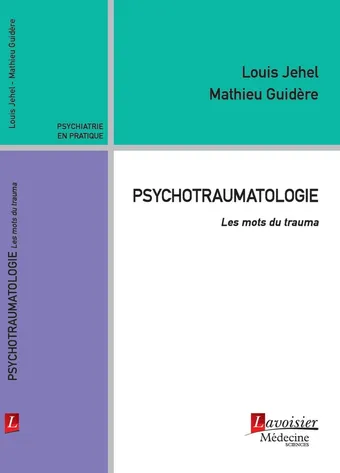
Psychotraumatologie, Lavoisier Médecine Sciences
Book

Psychotraumatologie

Les mots du trauma
with Mathieu Guidère · Lavoisier Médecine Sciences · March 1, 2022 · 233 pages · ISBN 978-2-257-20766-1

A review of current knowledge in psychotraumatology, at the crossroads of psychiatry and the language sciences. The book traces the history of their interaction, describes how psychotrauma shows in language (semantics, narrative, autobiographical memory, re-experiencing) and opens new avenues for understanding and prevention, from predictive linguistics to big data and artificial intelligence.
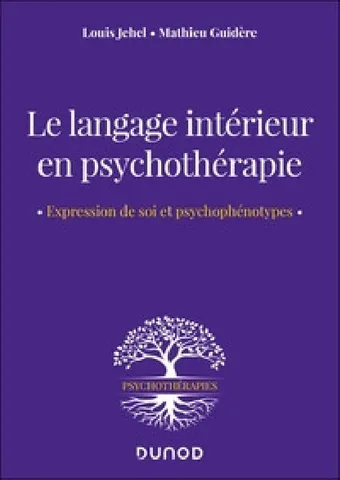
Le langage intérieur en psychothérapie, Dunod
Book

Le langage intérieur en psychothérapie

Expression de soi et psychophénotypes
with Mathieu Guidère · Dunod · October 2, 2024 · 256 pages · ISBN 978-2-10-087266-4

Inner dialogue explored from four angles: inner speech as a form of self-expression that shapes identity, its psychopathology (when the inner voice becomes overly critical), its use for psychophenotyping in the light of neuroscience, and its value as a diagnostic and therapeutic tool in psychotherapy.

04 · Video

Recovering from psychological trauma

A conversation between Louis Jehel and Xavier Emmanuelli, co-founder of Médecins Sans Frontières and founder of the Samu social.

Ideas in Science · July 15, 2025

More talks

“The trauma, fear and pain of these families will be extremely intense”

CNEWS · Punchline · November 24, 2023